Welcome back, aspiring boaters! I hope that everyone stays safe during this fear-inducing time with the COVID-19 virus. The itch to go boating or to go out like you’re used to may be strong, but please stay inside and stay safe! This week we’ll continue the series on water sports with water skiing!
For this water sport, as with all of them, you need a life jacket and spotter as required legally (click here for a refresher of boating laws). It is also important for drivers to be aware of the lake and other boats, as well as how the person they’re towing is doing.
Water skiing check list

One of the original water sports, skiing is still one of the most popular. Slalom skiing, or just using one ski, is also an option for those that are a bit more confident. To start, though, it is likely easier to just stick to the basics. You’ll need:
- A set of skis correct for your skill, weight, and foot size (check out Boating Mag for tips)
- Water ski rope with attached handle (that floats)
- A boat with the capability to go 25-35 MPH (likely a V-hull that can easily cut across the water)
It’s likely best to get combo skis with adjustable foot bindings with a rear “toe pocket” if you ever want to attempt slalom skiing. If you need extra help when starting off, some suggest tying the skis together with a nylon rope to prevent splits (or face plants) from beginners and children. I personally learned without one, but judge it based on your own ability and confidence.
how to ski
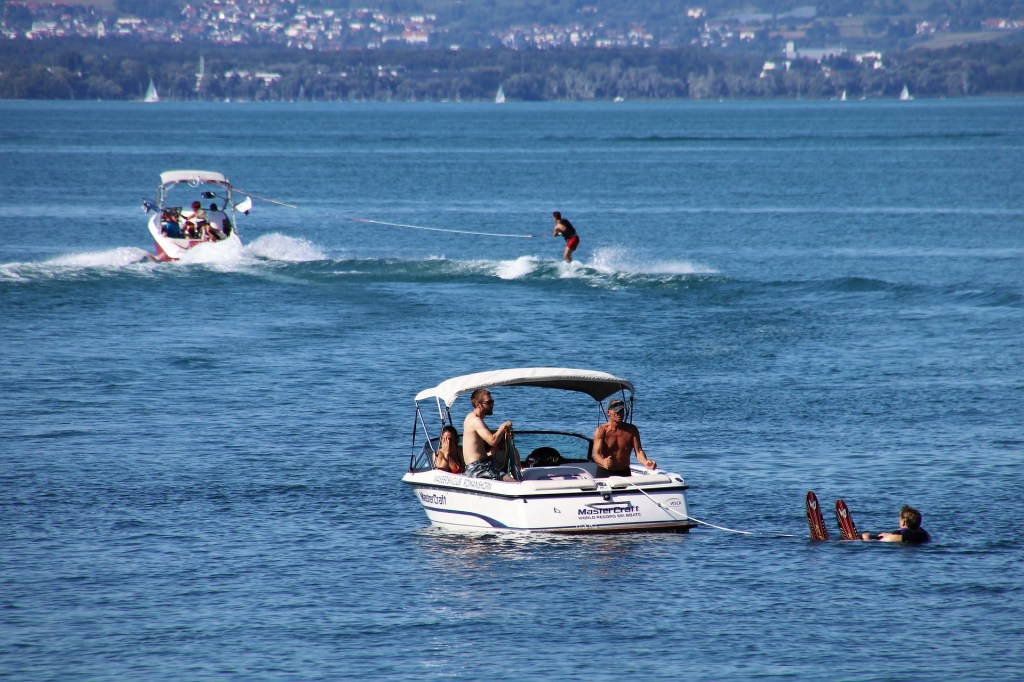
- As with a majority of towable water sports, water skiing requires a deep water start, so find a safe spot to get set up. It’s likely easier to make sure the skis are adjusted to the correct setting for your feet before getting in.
- Jump into the water and have someone (gently) slide the skis and rope into the water for you. Put the skis onto your feet (and try not to fall over like I usually do).
- Get your balance in a sitting-in-a-chair type of position, leaning back with the tips of your skis sticking straight up out of the water about shoulders width apart. Have a good grip on the rope handle, with the rope between your skis.
- Once you’re comfortable and ready, signal your driver to go; it will be a very fast start, getting up to speed (25-30 MPH) almost immediately. Let the boat do the work; don’t pull yourself up and instead focus on maintaining your position.
- When you’re standing you can straighten your legs a bit, but keep them generously bent to absorb any up and down movement from waves. Keep your back as straight as possible and your legs at same width apart. Feel free to straighten your arms.
- If you want to get a little fancy, you can move to the left by putting pressure on your left foot and angling the point of your skis in that direction and vice versa for going to the right.
- When you want to stop you can just let go of the rope; without the forward pulling force, you will peacefully sink down into the water and your boat can turn and pick you up. It’s best to signal before doing so.
And there you go; you’re skiing! One of the most important things to remember is if you’re falling, let go of the rope. You may think you can save yourself, but especially if you’re just a beginner, holding on will only do more damage; the boat will drag you and has a higher possibility for injury.
That’s it! Make sure to do your research on the skis and rope that you decide to purchase to ensure that you’re obeying all of the regulations and this summer, you can be a skiing star! Comment below with questions or what water sport you would like to read about next. As always, have fun and be safe!
Comment, like, and subscribe for more boating tips and tricks!

 Advice for the Aspiring Boater