Welcome back, aspiring boaters! I hope that everyone stays safe during these trying times in a COVID-19 world. You may want to go boating or go out like you’re used to, but please stay inside and stay safe!
For the last installment in our water sports series, we’re talking about wakesurfing! Remember that you need a life jacket and spotter as required legally (click here for a refresher of boating laws). It is also important for drivers to be aware of the lake and other boats, as well as how the person they’re towing is doing.
pre-surf checklist
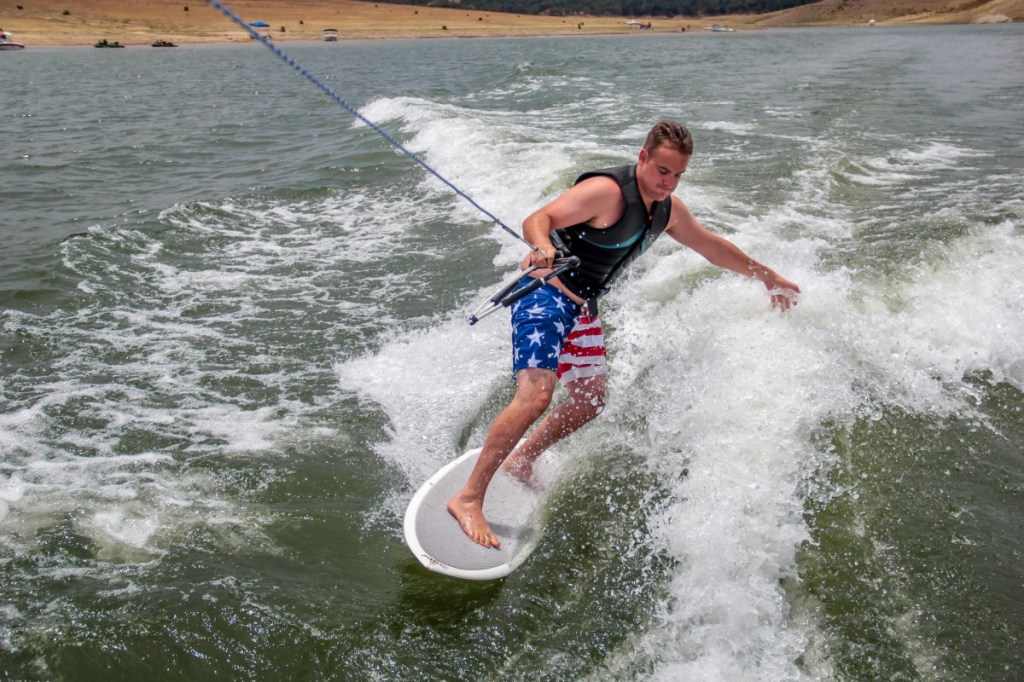
Unlike typical ocean surfing, where it’s necessary to rely on the water itself to provide a quality wave that lasts for a limited amount of time, all while competing with other surfers for said wave, wakesurfing is a more controlled and solitary. To start, you’ll need:
- The right board for a beginner (check out Discover Boating for tips)
- A wakesurfing rope (thick and short with a heavily padded handle)
- An inboard boat
There are boats made specifically to produce surfable wakes, but they’re not required. However, don’t trying surfing behind an outboard boat (the sterndrive/propeller is behind the boat). Instead, make sure that your boat in an inboard, with the sterndrive under the boat, to prevent any nasty injuries that may result from contact.
how to wakesurf

The following are some basics for getting up and going. It is a good idea to practice and listen to professionals like Brian Grubb.
- If you’re surfing left foot forward, it’s easiest to start on the left side of the boat (you will face the the wake once you’re up and going) and if you’re right foot is forward, start on the right.
- While floating in the water, place your heels on the board (that should be flat on the water in front of you) and grip the rope’s handle with whichever hand is closest to the boat.
- Signal the driver to start; wakesurfing speed is typically 10-14 MPH. Similar to getting up in wakeboarding, dig your heels in to use the water’s force to pull you up; don’t try to do it yourself.
- Keep your knees bent over your toes and find a comfortable balance in the sweet spot of the wake, where the rope is slack and it’s the wake pushing you forward.
- Whenever you’re ready, throw the rope into the boat (there’s no rush) and surf for however long you’d like!
As you’re going at low speeds and are not attached to the board, you are arguably less likely to get hurt from wakesurfing than water skiing or wakeboarding.
There you have it! No ocean required for this surfing experience, so this summer you can be the surfer you’ve always dreamed of being even if you live in the middle of Ohio! It does take research and practice, so don’t get discouraged. Have fun and be safe!
Comment, like, and subscribe for more boating tips and tricks!

 Advice for the Aspiring Boater